Wednesday, 21 January 2026

The ambiguity of veiling


One of the reasons I am so interested in veiling is because of its ambiguity. It can conceal or reveal, it can hide or highlight, it is worn by nuns as well as exotic dancers, it is associated with both marriage and mourning. I have used this ambiguity in my practice by using veils as a means of exploring feminism and the place of women in society. Veiling is also associated with gothic novels - just think of Wilkie Collins’ story The woman in white. Many of these nineteenth century novels were also written to critique the position of women and highlight their lack of legal rights. As those writers knew, it is often easier to get across your point of view if you engage the reader by telling them a story rather than laying out a series of dry facts. Consequently, I have made bridal veils linked to actual gothic heroines such as Tess of the Durbevilles (there’s more about this veil in my 7 January post) and Miss Havisham, but have also used gothic tropes to make lace veils incorporating the words No, no, no or Help me. The main image also includes a veil reflecting on the life of Charlotte Bronte and I have also used Jane Austen’s life as inspiration for another one.

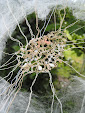
All of those pieces were wedding veils, but I have also made black mourning veils to reflect the darker aspects of gothic tales. One of these is ‘Belladonna’, which you can see in the image above. The design of the lace trim on this veil was inspired by the leaves and berries of the deadly nightshade plant (Atropa belladonna to give it its Latin name). The gold thread running through it suggests that the widow may not be surprised or devastated by her husband’s demise. I’m always intrigued when I exhibit these veils that prospective brides ask if they are for sale and I wonder if they have actually read the labels!

Friday, 16 January 2026

Broken lace bobbins

Lace bobbins are prone to wear and tear because they are used so often and sometimes they break, especially at the top. The head of the bobbin is the thinnest part and also receives the most tension, as this is where the thread is wound round and looped to keep it in place. A common breakage occurs at the very top of the head, like the bobbin on the right in the image here. The bobbin can still be used as the thread can be looped just below the bulb but the bobbin won’t hang quite straight and there is more wear on the thread. Also the break may leave a rough edge on which the thread can catch and it is interesting that the top of this bobbin has been covered with a dot of sealing wax to smooth it off so the lacemaker can continue to use it.

The second bobbin on the right here has also lost its head and the lacemaker has decided not to repair it but to repurpose it. She has removed the head completely and ground the remaining neck down into a point and removed the spangle of beads from the tail of the bobbin. In its new form as a stiletto. It can now be used for broderie anglaise lacework. To do this it would be pushed through fabric to make a hole which the lacemaker would then sew round in blanket stitch, similar to the embroidery in the image above although that is not handmade and has been worked with a machine. It is impossible to know how the wooden bobbin was broken, but I think it originally had channels of lead or pewter as decorations and these either fell out completely or were beginning to fall out, making the surface rough and difficult to work with. More metal has been used to cover the surface and make the bobbin smooth again.

The bobbin on the far left has been very skilfully repaired. The neck must have broken and the top of a wooden bobbin has been cut to splice the two together to make it useable again. Pinned in place with a metal rivet this bobbin feels just a secure as the day it was first made. I have seen other bobbins repaired in this way so I think this was done professionally and was probably a service that bobbin makers offered their customers. What I like most about these repaired bobbins is the fact that they were so well loved that even when they broke their owners still wanted to use them and so repaired or repurposed them.

Wednesday, 7 January 2026

Wedding veils – happy ever after?


These wedding veils bring a gothic eye to traditional fairy tales and question the idea of marriage being the ultimate dream for fictional heroines. The image above shows the No, no, no veil, on the left, designed for the reluctant bride, and a veil celebrating Thomas Hardy’s heroine Tess of the Durbevilles on the right. The ‘No, no, no veil’ was inspired by the idea of a reluctant bride, who is forced into an unwanted marriage, using her bobbins and thread, the only means of discourse she possesses, to reveal her inner thoughts and appeal for help. The veil on the right references the episode in Tess of the Durbeville’s story where she writes a note to Angel Clare on the night before they marry, telling him about her past, in case that knowledge would cause him to change his mind. It is only once they are married that she realises he did not find the note and when she confesses her chequered past he rejects her. The disintegrating paper represents the hidden note and the fragility of the marriage. The veil is entitled ‘Paper trail’ reflecting the path the story follows after the confusion over this slip of paper, which eventually leads to Tess’s trial and sad end.

This veil with its sparkling fringe reflects the allure of marriage for the gothic heroine. From a distance this sparkling fringe appears to be made of soft, smooth thread but closer inspection reveals that it is composed of rows of hard, sharp pins. Its title ‘Pinned down’ suggests the sharp reality of conjugal bliss and domesticity. These veils are part of a series based on research into Victorian gothic novels and domesticity and their relevance to contemporary life.

Friday, 2 January 2026

Stitched QR codes and what they can reveal

 This embroidered QR code links through to my website when you read it with a smartphone. However I first became interested in using QR codes as a way of hiding information in plain sight in a decorative way. The idea being that the message could easily be overlooked in the same way as domestic textiles and their makers often are. I sometimes hide text within lace patterns but QR codes can contain much more information in a smaller space. QR codes do have to be quite exact though for the camera on a smart phone to recognise them. My first attempts were made in black bobbin lace but they were not reliable enough to work every time. I tried working the codes at an angle so the squares were cloth stitch diamonds and alternatively with the squares as tallies, but neither worked very well. I also experimented with crochet squares but they became too large for the backgrounds I wanted. I then tried cross stitch embroidery straight onto my background net but that wasn’t reliable either. Eventually I found that cross stitch embroidery on counted thread fabric was the most effective way of producing the QR codes.

This curtain Insider information contains many coded messages that together form a narrative about the domestic environment. The words ‘Help me’ are stitched in human hair on to the curtain, which also includes an embroidered QR code. The code can be read to reveal the words ‘Escape while you can’ while the human hair contains the DNA of the seamstress. Combined with the veil of the curtain they seem a cry for help and a warning to others. Both types of embroidery reference Victorian domestic needlework, such as samplers and mourning brooches, and hint at a gothic tale of confinement and control.