

The second bobbin
on the right here has also lost its head and the lacemaker has decided not to
repair it but to repurpose it. She has removed the head completely and ground
the remaining neck down into a point and removed the spangle of beads from the
tail of the bobbin. In its new form as a stiletto. It can now be used for
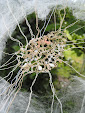
broderie anglaise lacework. To do this it would be pushed through fabric to
make a hole which the lacemaker would then sew round in blanket stitch, similar
to the embroidery in the image above although that is not handmade and has been
worked with a machine. It is impossible to know how the wooden bobbin was broken,
but I think it originally had channels of lead or pewter as decorations and
these either fell out completely or were beginning to fall out, making the
surface rough and difficult to work with. More metal has been used to cover the
surface and make the bobbin smooth again.

The bobbin on
the far left has been very skilfully repaired. The neck must have broken and the
top of a wooden bobbin has been cut to splice the two together to make it
useable again. Pinned in place with a metal rivet this bobbin feels just a
secure as the day it was first made. I have seen other bobbins repaired in this
way so I think this was done professionally and was probably a service that
bobbin makers offered their customers. What I like most about these repaired
bobbins is the fact that they were so well loved that even when they broke
their owners still wanted to use them and so repaired or repurposed them.

No comments:
Post a Comment