

It wasn’t the
subject of the painting that attracted me. In fact I felt a bit sorry for the
puritan man in the picture who looks rather intimidated by the two maids on either
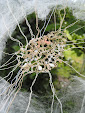
side of him. It caught my eye because of the accurate depiction of the lacework
round the tablecloth, which you can see in close up in the photo at the top of
this post. It is in fact drawn work where threads are pulled, or drawn, out of
the background cloth and the remaining threads are used as a background for
embroidery stitches. The horizontal and vertical threads you can see were
originally part of the cloth and the diagonal ones were added as embroidery
stitches with a needle and thread. The raw edges of the rectangular shapes
would have been secured with closely worked buttonhole stitches like the edges
in the image below.

However this embroidery,
although it looks like the lace in the painting, is not drawn work because the
threads used to make the pattern across the open space are thicker than the
cloth threads and have been added afterwards as free embroidery.

I was also
interested in the caps on the maids’ heads especially as I had been looking at
speldenmuts a few weeks before. The ones in the painting are much smaller than the caps from the
Netherlands and beautifully painted so you can see the gathers and the spots on
the muslin. However I wasn’t sure that embroidered muslin would have been use
for servants headwear in the seventeenth century, which is the time that the
painting is set. I’m also dubious about the net curtain at the window. I’ve
seen several paintings and photographs of similar half curtains at the windows
of cottages in the nineteenth century but not in the seventeenth. Who would
have thought that a casual visit to an art exhibition would have thrown up so
many textile questions!

No comments:
Post a Comment