As part of
the relief work, lace committees were set up to buy lace from local lacemakers but,
by 1915, a shortage of thread from Ireland and Britain was limiting the amount
of lace that could be made. It was then that the CRB rules were amended to
allow the importation of a certain weight of thread and the export of the same
weight of lace to France, Britain and the USA for sale. This provided the thread
the lacemakers needed and opened up new markets for the sale of the lace. The Brussels
Lace Committee (BLC) oversaw the entire lace project and employed about 45,000
lacemakers as well as professional designers.

The
tablecloth was designed by the well known Belgian artist Isidore de Rudder and
incorporates images of four saints. St George and St Elisabeth of Hungary
represent the Belgian King and Queen and St Gudula and St Michael are the
patron saints of Brussels. There are also references to battles in which the
King took part and the coats of arms of 16 Belgian cities particularly affected
by the fighting.

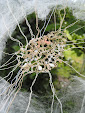
The borders
include ferns and wildflowers referencing the forests and fields of Belgium. As
well as seaweed to remember the breaching of the dykes at the River Yser in
1914 which had halted the German advance. The outer border of the tablecloth
includes medallions of flowers and mushrooms symbolising qualities such as
rebirth, humility and immortality. The tablecloth was made at the convent lace
school in Erenbodeghem and presented to Queen Elisabeth by the BLC, at the end
of the war, on her return to Belgium from exile. It is now held in the Royal
Museum of Art and History in Brussels.