

The plait is
made with two pairs of bobbins, by crossing the second thread over the third
(the cross) and then passing the second and fourth threads over the first and
third (the twist). This crossing and twisting is then continued until the
length of plaiting is complete. Where two plaits meet they are crossed in the
same way using each pair of threads as a single thread. Picots are made on the
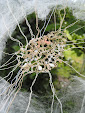
outer edges. In the main image five picots are made on the top part of each
main loop, but in this image two picots have been made and the loops are wider
and shorter making a more solid edging.

The ninepin
on the upper part of this image is a basic style but the lower part of the
image shows a variation which follows the same basic pattern with the addition
of three larger loops of plaiting at the apex of the main loop.

This
variation includes one main loop intersected by two wider and lower loops
crossing it and each other, with one picot at the top of the main loop. There are
many other types of ninepin, including versions with two main loops overlapping
each other or an outer and inner loop intersected by a long joining plait. The
plaits linking the loops may also be replaced by leaves or tallies to make a
more solid join, and the number and placing of picots can also be varied.

Ninepin lace
makes a distinctive and beautiful edging to any piece of lace and even a small
section can be added to a design to provide a highlight along a straight edge
or an attractive link across an indentation.

No comments:
Post a Comment