Thursday, 10 March 2016

Website


Updating my website this week has made me consider the reasons for having it. I suppose the main one is advertising what I do, so curators, for example, can look me up and see if my work would fit into any exhibitions they might be thinking about. It’s also a place where people who know my work already can see where I’m going to be exhibiting so they can come and see it and catch up. Then it also serves as a record of what I’ve done and when – in fact I often go back to the website when I’m filling in applications to check when I made a particular piece. It’s also a handy place where people can find out about my research, practice and CV all in one place, so I can hand out business cards with the website address on them and know that those who are interested can access the information they need and also contact me if they want to. By linking it to this blog I can also keep my audience up to date with what I’m researching on and making, in an informal way, which I find easier than updating the website. The conclusion is that it is a very useful thing to have and I should update it more often, so the next task is to take more photos to update the gallery section!

Thursday, 3 March 2016

Damage and repair symposium


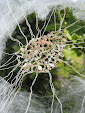
I really enjoyed this symposium at UCA Farnham yesterday – it included some interesting presentations and an engaged and knowledgeable audience. It was linked to the exhibition ‘What do I need to do to make it OK?’, curated by Liz Cooper at the Crafts Study Centre, and she opened the day by talking about the exhibition. There were two keynote speakers, the first, Bouke de Vries spoke about his background in ceramic conservation and his current practice, in which he uses these skills to give damaged objects a new narrative. Freddie Robins was the second keynote speaker and she described her current practice making full-sized machine-knitted human skins and how she has cannibalised them in her recent work. She also described the therapeutic aspects of hand knitting. The idea of craft as therapy was also taken up by Charlotte Bilby in her presentation on prisoner quilts and the Fine Cell Work initiative.

 
Claire Wellesley-Smith also discussed how she used crafts and dyeing to bring together a group of Bradford residents to consider the textile heritage of their town. Colette Dobson and Celia Pym described their work with groups in the medical community; Colette considering the emotional and sexual damage caused by cancer, and Celia linking mending and anatomy in the Dissection Room at King’s College, London. 

 
Mending, and in particular darning, was also the focus of Stella Adams-Schofield’s historical research, which culminated in an evocative compilation of images and recorded oral history. Mending as metaphor for healing was the thread linking the papers by Victoria Mitchell and Marlene Little. Victoria discussed holding, healing and the agency of the photograph, with reference to a photograph of Judith Scott cradling a large shape she had wound in thread. Marlene spoke about her own work depicting the unravelling of memory and the beautiful ‘Dementia darnings’ produced by Jenni Dutton in memory of her mother’s decline into dementia. In contrast to all this textile work, Marie Lefebvre considered the repair of small electrical products and designing for sustainable behaviour. The day ended with a viewing of the exhibition, from which the images are taken – the thrush’s nest entitled ‘Comfort and joy’ by Saidhbhin Gibson, and ’60 beats a minute’ by Karina Thompson. It was a great day – thanks to all involved.

Wednesday, 24 February 2016

Limerick lace


I’ve been trying to pin down exactly what Limerick lace is. I always thought it was needlerun lace on net, but various descriptions seem to suggest it is any lace made in Limerick, whether tambour, neelderun or variations on embroidery. Mrs F Nevill Jackson in her book ‘Old handmade lace’ describes it as being of three varieties which she describes as tambour (using chain stitch on machine made net), run (coarse threads are run upon net), and applique (cambric or net is overlaid on net, sewn down and the background then cut away) – which sounds like what I would call Carrickmacross lace. Matthew Potter in his recent book about the Limerick lace industry entitled ‘Amazing lace’ describes Limerick as coming in two forms: tambour and needlerun. He says Charles Walker introduced tambour lace to Limerick in 1829 and that needlerun lace was introduced by the late 1830s by Jonas Rolf. Limerick does therefore seem to be a catch all name for a variety of lace types, which are linked more by their design and final appearance than by the techniques that made them.  

Friday, 19 February 2016

Veil making


I’ve cut out the pattern for my first veil. I was going to use a commercial pattern but some of those have quite a large periphery, which would mean I had to make 360 cm of lace to go right the way round even the smallest. I’ve therefore decided to make my own from a rectangular shape folded back on itself. That means I have to make 145 cm of lace – still a lot but not quite as much as for the circular style. I’ve also bought hair combs for the veils and I’ve got some old artificial flowers which look suitably antique so I can gather the veiling up and attach it to the combs and flowers to make it look more realistic.

Tuesday, 16 February 2016

A flavour of lace


I’ve been photographing some lace, for the exhibition I’m sharing with Gail Baxter at the Knitting and Stitching show in the autumn, for the promotional website and leaflets. Apart from the usual difficulties of photographing white, delicate lace, the problem is compounded because I haven’t made half of it yet! That’s the trouble with producing a new body of work for a show, they want the advertising photos before you’ve done the work! It is all underway – I have two lace patterns on my pillows and have made a start on my veil with the pinned fringe. I’ve also bought veiling and patterns to make the veils. I also have the materials and patterns for the silk paper veils, but I want to make those when the weather improves and I can dry them outside in the sun. To overcome the problem of lack of finished pieces I’ve decided to supply images that give a flavour of my lace rather than images of the actual pieces I’ll be showing. So I have taken some photos of silk paper and spidery stitching, some with cut lace, and some with menacing pins. I think the flavour is ‘ethereal lace with a hint of menace’! 

Tuesday, 9 February 2016

Goldilocks lace!


The Goldilocks planet is the way astronomers describe the Earth. In the same way that Goldilocks ate the porridge that was just right, not too hot or too cold, the conditions on Earth make it just right for the formation of life. I realise the lace I’m making at the moment for my veiling series is just right too – the number of bobbins isn’t too great or too small, they fit neatly on the pillow but give a pleasing spread. The pattern includes two repeats so is reasonably demanding and interesting but not complicated. I can get two and a bit repeats completed in an hour so I feel I’m making progress. Because I’m using a travel pillow the lace is easy to transport and I can make it anywhere. Also because it’s easy to pick up and put down I find I can work at it in spare moments unlike a large or complicated pattern which requires time to get settled to. All in all – Goldilocks lace!  

Thursday, 4 February 2016

Leavers lace


I’ve been reading the series of booklets written by David Lowe and Jack Richards about lace in Nottingham and was surprised to discover that John Leavers (or Levers – the spelling seems to have changed over the years) actually moved to France and built many of his lace machines there. John Leavers was born in 1786 in Sutton-in-Ashfield and trained as a ’setter up’ of lace machines in Radford. He spent two years developing his own lace machine in Nottingham and produced a prototype in 1813. The history by Lowe and Richards says that he became disillusioned by the Nottingham lace trade and in 1821 he moved to France with his two brothers. They settled near Rouen, in Grande Courenne, and started building lace machines there, which became the basis of the lace industry in Calais. John’s first wife died childless in 1824 and he then married Francoise Massiotty from Brussels. His two sons from his second marriage both worked in the lace industry; William, the eldest seems to have stayed in France, but Edward returned to Nottingham to build lace machines. John died in France in 1848, and a street in Grande Courenne is named after him, but William and his mother seem to have continued with the family lace business. If you want to read more of the story I recommend ‘The lace heritage’ by Lowe and Richards. The image above also comes from the book and shows Leavers and Raschel laces.